

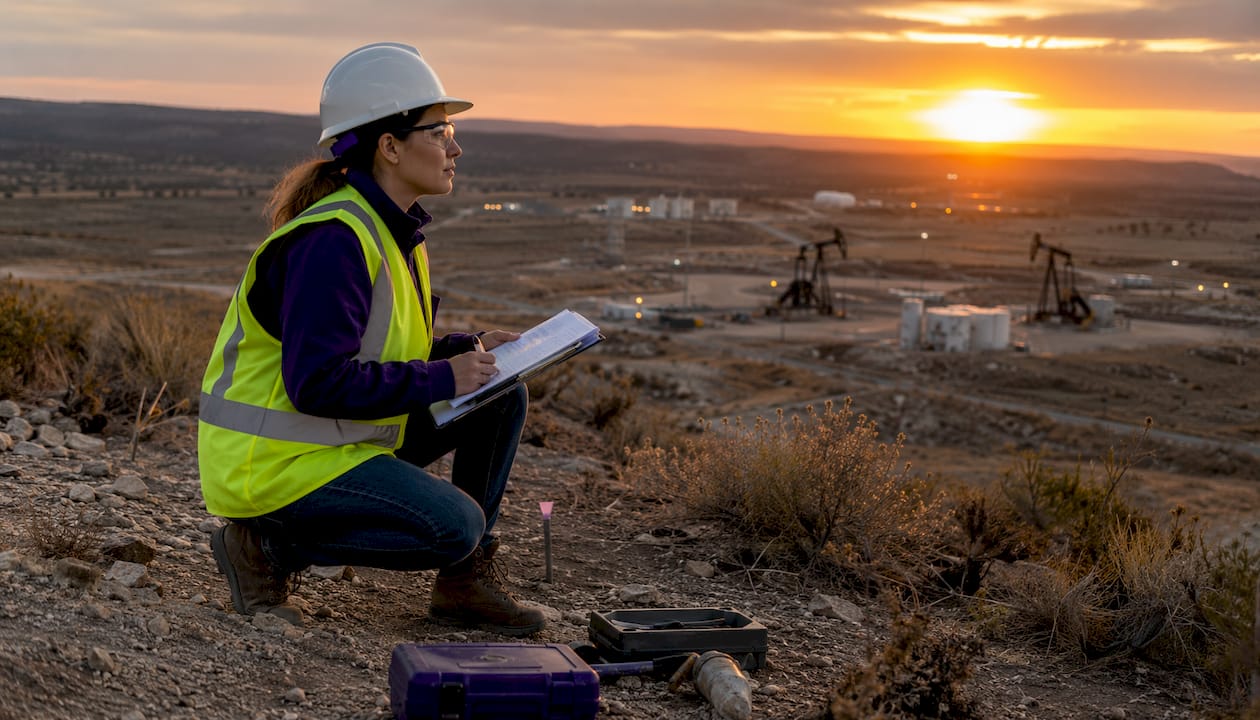
What are crude oil and petroleum, and how do they differ?
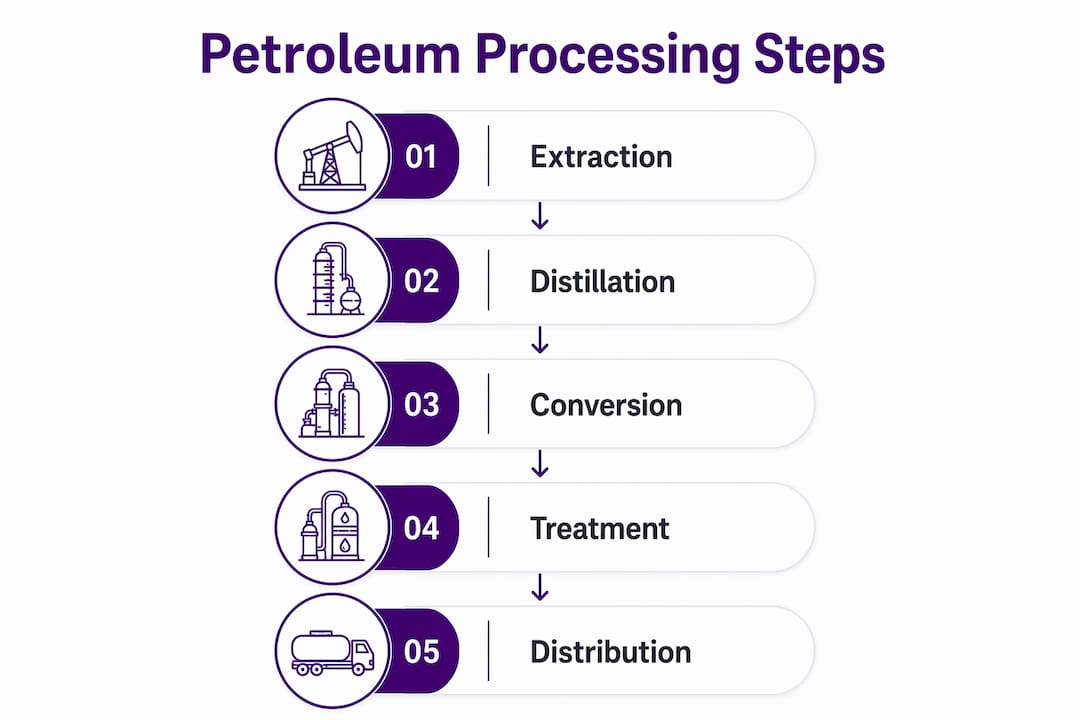
Crude oil and petroleum are related but not identical. Crude oil is the naturally occurring, unrefined liquid mixture of hydrocarbons extracted directly from underground reservoirs. Petroleum is the broader category: it includes crude oil itself plus every refined product made from it, from gasoline and diesel to jet fuel and asphalt.
In casual conversation, people use “oil” and “petroleum” interchangeably, and that is usually fine. In technical and industry contexts, the distinction matters. A barrel of crude oil is raw feedstock. A barrel of petroleum products is what comes out the other end of a refinery.
Both are fossil fuels, formed from the remains of ancient marine organisms buried under layers of sediment over millions of years. The word petroleum comes from the Latin petra (rock) and oleum (oil), meaning literally “rock oil.”
Key differences at a glance:
- Crude oil: Raw, unprocessed liquid extracted from the ground; contains hydrocarbons plus impurities like sulfur and metals
- Petroleum: Broad term covering crude oil and all refined products derived from it
- Petroleum products: Gasoline, diesel, jet fuel, heating oil, lubricants, asphalt, and petrochemical feedstocks
- Common usage: “Oil” and “petroleum” are often used interchangeably in everyday speech, but technically petroleum is the parent category
- Source: Both originate from ancient organic matter transformed by heat and pressure underground
What is crude oil made of chemically?
Crude oil is not a single compound. It is a complex mixture of thousands of hydrocarbon molecules, each with different chain lengths, structures, and properties. The exact composition varies by where the oil was formed, which is why crude from West Texas behaves differently in a refinery than crude from the Middle East or Venezuela.
The main chemical families in crude oil are:
- Paraffins (alkanes): Straight or branched carbon chains; the lightest ones become gasoline and LPG
- Naphthenes (cycloalkanes): Ring-shaped molecules; contribute to lubricant base stocks and jet fuel
- Aromatics: Benzene-ring structures; high energy density but regulated due to toxicity
- Asphaltics: Heavy, complex molecules that end up in road asphalt and residual fuel oil
Beyond hydrocarbons, crude oil contains sulfur, nitrogen, oxygen, and trace metals like vanadium and nickel. These impurities drive up refining costs and require removal to meet fuel standards.
Two classification systems matter most:
By sulfur content:
- Sweet crude: Low sulfur (below 0.5%); easier and cheaper to refine; commands a price premium
- Sour crude: Higher sulfur; requires additional processing to remove hydrogen sulfide
By density (API gravity):
- Light crude: High API gravity; flows easily; yields more gasoline per barrel
- Medium crude: Mid-range density; balanced product slate
- Heavy crude: Low API gravity; thick, viscous; yields more residual fuel and requires more intensive refining
West Texas Intermediate (WTI) and Brent crude are both light, sweet grades, which is why they serve as global price benchmarks. Heavy sour grades from Canada’s oil sands or Venezuela’s Orinoco Belt trade at a discount because they cost more to process.
How did crude oil form over geological time?
Crude oil’s origin predates the dinosaurs. It formed from microscopic marine organisms, primarily diatoms and other phytoplankton, that lived in ancient seas hundreds of millions of years ago. When these organisms died, they sank to the seafloor and were buried under accumulating layers of sand, silt, and rock.
The transformation from organic matter to oil took place over millions of years through two key forces: heat and pressure. As burial depth increased, temperatures rose and pressure built. This process, called catagenesis, broke down the organic material into simpler hydrocarbon molecules. The result was crude oil and natural gas, generated within what geologists call the “oil window,” a depth and temperature range where conditions are just right for oil formation rather than gas or unaltered organic matter.
Formation stages:
- Accumulation: Marine organisms die and settle on the seafloor
- Burial: Sediment layers cover the organic material, cutting off oxygen
- Diagenesis: Microbial activity partially breaks down organic matter at shallow depths
- Catagenesis: Heat and pressure at greater depths convert organic material into hydrocarbons
- Migration: Oil and gas migrate upward through porous rock until trapped
- Trapping: Impermeable rock layers (cap rock) stop migration, forming a reservoir
Oil reservoirs are not underground lakes. The oil sits within the tiny pore spaces of sedimentary rock, like water in a sponge. Structural traps, such as anticlines (dome-shaped rock folds) and fault traps, are the most common reservoir geometries. Salt domes can also create traps by pushing rock layers upward.
Pro Tip: The depth at which oil forms, typically between 7,500 and 15,000 feet below the surface, is called the “oil window.” Shallower deposits tend to remain as immature organic matter; deeper ones convert to dry natural gas instead of liquid oil.
How refineries turn crude oil into usable petroleum products
Refining is where raw crude becomes the fuels and materials that power the economy. Petroleum refineries follow three fundamental steps: separation, conversion, and treatment. Each step adds value and moves the crude closer to finished products.
Separation through distillation is the starting point. Crude oil is heated in furnaces and piped into tall distillation towers. Inside the tower, different hydrocarbon fractions vaporize at different temperatures and condense at different heights. Lighter fractions like gasoline and liquefied petroleum gas rise to the top. Kerosene and jet fuel collect in the middle. Heavier gas oils settle lower, and the thickest residues, used for asphalt and heavy fuel oil, pool at the bottom.
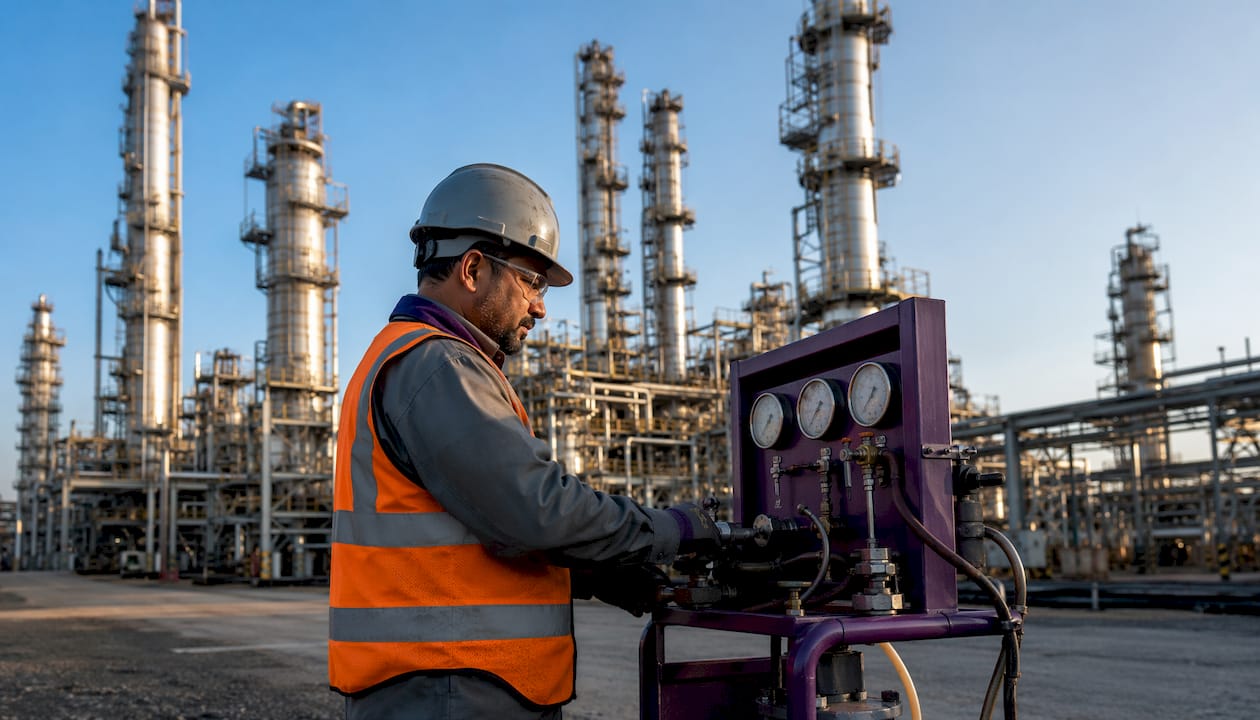
Conversion is where refineries add the most economic value. The most widely used method is catalytic cracking, which uses heat, pressure, and a catalyst to break heavy, low-value hydrocarbon molecules into lighter, more valuable ones. Fluid catalytic cracking (FCC) units are the workhorses of most large refineries. Hydrocracking adds hydrogen to the process, producing cleaner products with lower sulfur. Reforming converts low-octane naphtha into high-octane gasoline blending components. Alkylation, essentially cracking in reverse, combines small gaseous molecules into high-octane liquid fuel.
One counterintuitive fact about refining: a 42-gallon barrel of crude oil produces roughly 45 gallons of petroleum products. The volume increases because refining breaks dense molecules into less-dense ones, similar to how a kernel of corn expands into a much larger piece of popcorn.
Common products from a barrel of crude oil:
- Gasoline (motor fuel, the largest single product)
- Diesel and heating oil
- Jet fuel (kerosene-type)
- Liquefied petroleum gas (propane, butane)
- Residual fuel oil
- Asphalt and road tar
- Lubricating oils and greases
- Petrochemical feedstocks (naphtha, ethylene precursors)
Treatment is the final stage. Refiners blend streams from different processing units to hit precise specifications for octane rating, vapor pressure, sulfur content, and cold-weather performance. The 1990 Clean Air Act Amendments pushed U.S. refiners to add oxygenated compounds to gasoline blends, reducing carbon monoxide and smog-forming emissions. Today, ethanol serves as the primary oxygenate in U.S. gasoline.
Pro Tip: Refineries adjust their product mix seasonally. In summer, they maximize gasoline output to meet driving demand. In winter, they shift toward heating oil and distillates. Catalytic cracking units make this flexibility possible by letting operators dial up or down on lighter fuel production.
How petroleum products are used across the United States
The United States is both the world’s largest oil producer and one of its largest consumers. Petroleum products touch nearly every sector of the economy, from the fuel in your car to the plastic in your phone case.

Transportation dominates U.S. petroleum consumption. Gasoline powers passenger vehicles; diesel fuels trucks, trains, and ships; jet fuel keeps commercial aviation running. Together, transportation accounts for the majority of U.S. petroleum product demand. Heating oil remains critical in the Northeast, where many older homes still rely on oil-fired furnaces.
Beyond fuels, petroleum feeds the petrochemical industry. Naphtha and other light fractions serve as feedstocks for ethylene and propylene, the building blocks of plastics, synthetic rubber, fertilizers, and pharmaceuticals. Petroleum products function primarily as fuels and lubricants, while petrochemicals are high-purity chemical building blocks used in manufacturing. The two categories overlap at the refinery gate but diverge sharply in their end uses.
| Petroleum Product | Primary Use | Notes |
|---|---|---|
| Gasoline | Passenger vehicle fuel | Largest single refinery output |
| Diesel | Trucks, trains, ships | Also used for power generation |
| Jet fuel | Commercial aviation | Kerosene-type, tightly spec’d |
| Heating oil | Residential and commercial heat | Concentrated in U.S. Northeast |
| Propane / LPG | Heating, cooking, agriculture | Widely used in rural areas |
| Asphalt | Road paving, roofing | Derived from heaviest fractions |
| Lubricants | Engine and industrial oils | High-value, lower-volume products |
| Petrochemical feedstocks | Plastics, chemicals, fertilizers | Naphtha and light fractions |
U.S. crude oil reserves rose 9% to 48.3 billion barrels by 2022, driven by advances in horizontal drilling and hydraulic fracturing. That production growth reshaped global supply dynamics and reduced U.S. dependence on imports. The shale revolution, centered in the Permian Basin of West Texas and New Mexico, turned the U.S. into a net petroleum exporter for the first time in decades.
Major petroleum applications in the U.S.:
- Motor gasoline for passenger cars and light trucks
- Diesel for commercial freight and rail
- Jet fuel for domestic and international aviation
- Propane for rural heating and agricultural drying
- Asphalt for highway construction and maintenance
- Lubricants for industrial machinery and vehicle engines
- Feedstocks for plastics, synthetic fibers, and chemical manufacturing
How does crude oil extraction affect the environment?
Oil extraction and petroleum use carry real environmental costs, and understanding them is part of understanding the industry honestly.
Drilling and production disturb land and marine ecosystems. Offshore platforms risk blowouts and spills; the 2010 Deepwater Horizon disaster in the Gulf of Mexico released an estimated 4.9 million barrels of crude, causing extensive damage to marine life and coastal wetlands. Onshore drilling in sensitive areas can fragment wildlife habitat and contaminate groundwater if well casings fail. Hydraulic fracturing, the technique behind the U.S. shale boom, requires large volumes of water and generates wastewater that must be carefully managed to prevent surface and groundwater contamination.
Burning petroleum products releases carbon dioxide, the primary greenhouse gas driving climate change. Combustion also produces nitrogen oxides and particulate matter, which contribute to urban smog and respiratory illness. The Clean Air Act and its subsequent amendments have pushed significant reductions in tailpipe emissions since the 1970s, but transportation remains the largest source of U.S. greenhouse gas emissions.
Methane leakage during oil and gas production is a growing concern. Methane is a far more potent greenhouse gas than CO2 over a 20-year horizon, and leaks from wellheads, pipelines, and storage facilities add to the sector’s climate footprint. The EPA and the energy industry have both invested in leak detection and repair programs, though the scale of the problem remains debated.
Oil spills, whether from tankers, pipelines, or production accidents, can devastate local ecosystems for years. Cleanup is expensive and never fully restores the pre-spill environment. These risks are why environmental review, regulatory compliance, and responsible operator selection matter so much to anyone involved in the energy sector.
Where are the world’s major crude oil reserves located?
Oil is not distributed evenly across the planet. Geology, not politics, determined where the great reservoirs formed, though politics has shaped who controls them ever since.
Global proven oil reserves totaled approximately 1,765.2 billion barrels at the end of 2024. The Middle East holds the largest share by far, with Saudi Arabia, Iraq, Iran, Kuwait, and the UAE collectively accounting for a majority of global proven reserves. Venezuela holds the largest single-country reserve figure due to its vast heavy oil deposits in the Orinoco Belt, though extracting that heavy crude economically has proven difficult.
The United States, Russia, and Canada round out the top tier of reserve holders. Canada’s reserves are concentrated in the Alberta oil sands, a form of bitumen-saturated sand that requires mining or steam injection to extract rather than conventional drilling. Russia’s reserves span Western Siberia and the Volga-Ural basin. U.S. reserves are concentrated in the Permian Basin, the Gulf of Mexico, and Alaska’s North Slope.
Proven reserves are not a fixed geological number. They represent quantities that are commercially recoverable under current price levels, technology, and regulations. When oil prices rise or drilling technology improves, reserves can grow without any new discovery, simply because previously uneconomic deposits become viable. This dynamic nature of reserve accounting is why reserve figures shift from year to year even in mature basins.
The geographic concentration of reserves in politically volatile regions has long influenced global energy security policy. The U.S. shale revolution partially addressed this by building domestic production capacity, reducing reliance on imports from unstable regions. Understanding U.S. energy market trends requires tracking both reserve data and the geopolitical factors that affect supply access.
How did the oil and petroleum industry develop historically?
The modern oil industry traces its birth to August 27, 1859, when Edwin Drake struck oil at 69.5 feet near Titusville, Pennsylvania. Drake’s well was not the first oil discovery in history, but it was the first drilled specifically to produce oil commercially, and it triggered a rush that transformed the global economy within decades.
The late 19th century saw rapid consolidation. John D. Rockefeller’s Standard Oil Company gained control of refining, pipelines, and distribution across the United States by the 1880s, controlling roughly 90% of U.S. refining capacity at its peak. The Supreme Court broke Standard Oil into 34 separate companies in 1911, several of which became the ancestors of today’s major oil corporations.
The 20th century brought oil to the center of geopolitics. The discovery of massive reserves in the Middle East during the 1930s and 1940s shifted the industry’s center of gravity. The 1973 Arab oil embargo demonstrated how dependent industrialized economies had become on imported crude, triggering price shocks, rationing, and a lasting push for energy diversification. OPEC, founded in 1960, became the dominant force in setting global production levels and, by extension, oil prices.
The late 20th and early 21st centuries brought two more revolutions. Deepwater drilling technology opened vast offshore reserves in the Gulf of Mexico, Brazil, and West Africa. Then hydraulic fracturing and horizontal drilling unlocked tight shale formations across the U.S., reversing decades of production decline and making the U.S. the world’s top oil producer by 2018.
Oil trading mechanics evolved alongside production. Today, crude oil trades globally on futures markets, with WTI and Brent serving as the primary price benchmarks. Understanding how oil CFDs work gives a useful window into how price exposure is managed by traders and producers alike.
Why crude oil and petroleum matter so much to the global economy
Oil is the single most traded commodity on earth, and its price ripples through virtually every sector of the global economy. When crude prices spike, transportation costs rise, manufacturing inputs get more expensive, and inflation tends to follow. When prices collapse, oil-dependent economies from Saudi Arabia to Texas face budget shortfalls and layoffs.
The oil industry divides into three segments, each with distinct economics. Upstream covers exploration and production: finding oil and getting it out of the ground. Midstream handles transportation and storage, primarily through pipelines and tankers. Downstream encompasses refining and distribution, turning crude into the products consumers actually use. Each segment carries different risk profiles and investment characteristics, which is why sophisticated investors often seek exposure to specific parts of the value chain rather than the industry as a whole.
Oil price volatility affects government revenues, trade balances, and currency values in oil-exporting nations. Countries like Saudi Arabia, Russia, and Norway derive a large share of government revenue from oil exports. A sustained price drop can force austerity measures; a price surge can fund sovereign wealth funds and infrastructure investment. For oil-importing nations, the calculus runs the other way: cheaper oil acts like a tax cut for consumers and businesses.
The energy transition adds a new layer of complexity to petroleum market trends. Electric vehicle adoption is growing, and renewable energy is displacing petroleum in power generation. Yet global oil demand has not peaked as of 2026, partly because petrochemical demand continues to grow in emerging markets even as transportation fuel demand plateaus in developed economies. The International Energy Agency and major oil companies hold differing views on when peak oil demand will arrive, reflecting genuine uncertainty about the pace of the transition.
For accredited investors, the oil and gas sector offers access to tax-advantaged energy income through direct participation in U.S. production projects. Fieldvest connects high-earning professionals with vetted operators offering large first-year tax deductions under intangible drilling cost provisions, alongside long-term cash flow from producing wells. Readers interested in quantifying the potential tax benefit can use Fieldvest’s tax deduction calculator to model their specific situation.

Key Takeaways
Crude oil is the raw unrefined hydrocarbon extracted from the earth; petroleum is the broader category that includes crude oil and every refined product made from it, from gasoline to asphalt.
| Point | Details |
|---|---|
| Crude vs. petroleum | Crude oil is unrefined; petroleum covers crude and all refined products including gasoline, diesel, and jet fuel. |
| Formation timeline | Crude oil formed from ancient marine organisms buried under sediment, transformed by heat and pressure over millions of years. |
| Refining volume gain | A 42-gallon barrel of crude yields roughly 45 gallons of petroleum products due to density changes during refining. |
| Global reserves | Proven global oil reserves totaled approximately 1,765.2 billion barrels at end-2024; U.S. reserves reached 48.3 billion barrels by 2022. |
| Economic reach | Oil price movements affect transportation costs, government revenues, inflation, and trade balances across every major economy. |
Recommended

Get the Fieldvest Energy Brief
and AI-driven demand shifts — curated for accredited investors. Smart. Strategic. Tax-advantaged.