


Why accredited investors choose U.S. oil and gas
Oil and gas investments give accredited investors something most asset classes can’t: a legal mechanism to write off a large portion of their capital in year one while generating ongoing cash flow. That combination of immediate tax relief and long-term income is what keeps drawing high-net-worth capital back to this sector, even as energy markets cycle through volatility.
To qualify as an accredited investor under SEC rules, you generally need a net worth exceeding $1 million (excluding your primary residence) or annual income above $200,000 individually. That threshold matters because most private oil and gas offerings are restricted to this group.
The core investment routes available to you:
- Direct participation programs (DPPs): Private partnerships where you invest directly in drilling or production operations, capturing the largest tax deductions
- Working interests: Direct ownership in a well’s production, with both upside and operating cost exposure
- Royalty interests: Income from production without bearing operating costs, lower risk but smaller deductions
- Publicly traded equities and ETFs: Natural gas stocks and sector funds offering liquidity but fewer tax advantages
- Private equity funds: Pooled capital targeting operated upstream assets across premier U.S. basins
Fieldvest connects accredited investors with vetted U.S. operators running projects structured for large first-year deductions and durable production income. The platform handles operator vetting and deal structuring so investors can focus on capital allocation rather than sourcing.
Key advantages of oil and gas investments

The tax treatment of U.S. oil and gas is genuinely unlike any other asset class. Three provisions drive most of the benefit.

Intangible drilling cost (IDC) deductions allow investors to deduct 65%–80% of a well’s total drilling costs in the year they are incurred. For a high earner in the 37% federal bracket, a $500,000 IDC deduction can translate to roughly $185,000 in tax savings in year one alone. These costs cover labor, chemicals, fuel, and other non-salvageable expenses tied to drilling.
Percentage depletion lets qualifying investors deduct a fixed percentage of gross income from a well each year, even after the original capital has been fully recovered. Unlike cost depletion, which is capped at your basis, percentage depletion can generate deductions that exceed your original investment over the life of a well.
Tangible drilling cost (TDC) deductions cover equipment like casing and wellheads. These are depreciated over seven years under MACRS rather than expensed immediately, but they still reduce taxable income meaningfully over the holding period.
Beyond taxes, oil and gas investments offer:
- Inflation hedge: Commodity prices tend to rise with inflation, protecting purchasing power
- Portfolio diversification: Low correlation to equities and bonds during many market cycles
- Cash flow from production: Monthly distributions from producing wells, often starting within 6–12 months of drilling completion
- Commodity exposure: Direct participation in energy price movements without derivatives
Clarke Energy Fund Management (CEFM) is one example of an operator that structures projects to combine these tax benefits with disciplined project execution, targeting both deduction efficiency and production longevity. Investors working through platforms like Fieldvest gain access to operators with this kind of track record, along with the tax-saving project examples that illustrate how deductions play out in practice.
What investment strategies work best for oil and gas?
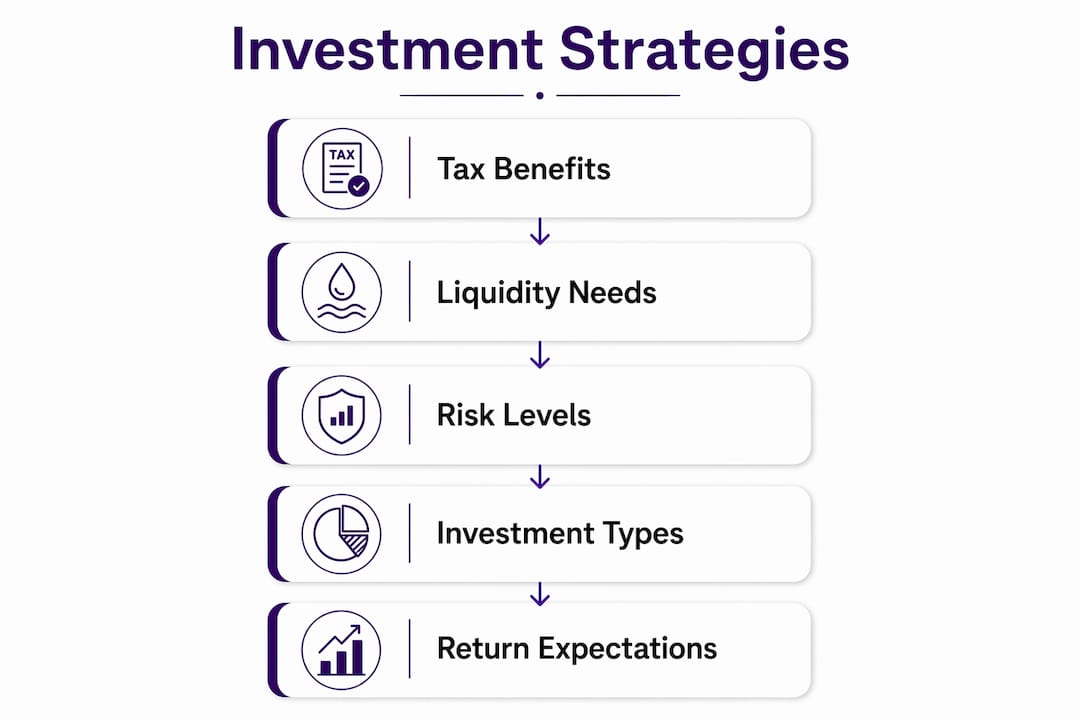
Strategy selection in oil and gas comes down to three variables: how much tax benefit you want, how much liquidity you can sacrifice, and how directly you want to participate in operations.
Direct participation programs
DPPs sit at the high-deduction, low-liquidity end of the spectrum. You invest as a limited partner in a drilling program, receive IDC deductions in year one, and collect production income over the well’s life. The trade-off is that your capital is essentially locked in until the wells produce enough to return it, which can take years. There is no secondary market for most DPP interests.
Working interests vs. royalty interests
A working interest gives you a proportional share of production revenue but also a proportional share of operating costs. Royalty interests strip out the cost exposure, delivering a percentage of gross revenue with no ongoing liability. Working interests generate larger deductions; royalty interests generate steadier, lower-risk income. Many experienced investors hold both.
Upstream, midstream, and downstream
- Upstream covers exploration and production. Highest risk, highest potential return, and the best access to IDC deductions.
- Midstream covers pipelines, storage, and processing. More predictable cash flows, fee-based revenue, and less commodity price sensitivity. Tailwater Capital’s investment in the Pickton Gas Storage hub in Northeast Texas infrastructure is a recent example of institutional capital flowing into midstream at scale.
- Downstream covers refining and distribution. Least correlated to wellhead prices but also furthest from the tax advantages available upstream.
Public equities and ETFs
Natural gas stocks and sector ETFs trade daily, which solves the liquidity problem. But publicly traded vehicles don’t pass through IDC deductions to individual shareholders. You get commodity exposure and dividend income without the first-year tax write-off that makes private participation so attractive to high earners.
Partnership structures
In most private oil and gas programs, an operator manages the project while investors provide capital as limited partners. The operator’s incentives should align with yours: they should earn primarily from successful production, not from upfront fees. Misaligned structures, where the promoter profits regardless of well performance, are a documented source of investor losses in this sector.
Pro Tip: Before committing capital to any partnership, ask specifically how the operator is compensated if the well produces nothing. If the answer involves substantial upfront fees or markups on drilling costs, that is a structural conflict worth scrutinizing carefully.
What to evaluate before committing capital
Private oil and gas offerings carry risks that publicly traded energy investments don’t. Understanding them before you write a check is not optional.
Liquidity is the first constraint. Private oil and gas investments typically lack any exit mechanism, meaning your capital may be committed indefinitely. Unlike a stock you can sell on Tuesday, a working interest in a producing well has no ready buyer. Plan for a holding period of five to ten years minimum, and only allocate capital you won’t need liquid.
Operator vetting is non-negotiable. The SEC has averaged more than 20 fraud cases per year related to private oil and gas offerings since the mid-2000s. The most common pattern: a promoter overstates drilling prospects, pockets fees from inflated cost estimates, and leaves investors with dry holes. Always request a third-party engineering report and an independent reserve audit before investing.
Broker due diligence reports matter. Registered brokers recommending private oil and gas offerings must independently verify promoter claims and produce a due diligence report. Ask for it. If the broker can’t produce one, that tells you something.
Key due diligence checklist:
- Verify broker registration through FINRA BrokerCheck
- Request independent third-party engineering and reserve audit reports
- Confirm the operator’s track record with verifiable references
- Review the use of proceeds: how much goes to drilling vs. fees
- Assess whether the promoter profits only from successful production
ESG and regulatory risk is real and growing. Stricter permitting requirements, methane regulations, and state-level restrictions can delay or kill projects. The IEF and BCG have documented how heightened investor ESG expectations are already constraining upstream capital allocation, which affects both project availability and exit timelines. Factor regulatory exposure into your underwriting, particularly for projects in states with aggressive climate legislation.
What the 2026 market tells you about timing and opportunity
The capital flows in U.S. natural gas right now are telling a clear story: institutional investors are betting heavily on infrastructure, LNG export, and AI-driven demand growth.
Mitsubishi’s $7.5 billion acquisition of Louisiana gas assets is a clear example. The deal was explicitly structured around two demand drivers: LNG exports to Asia and the surge in gas-fired power for AI data centers. Those data centers require firm, dispatchable power that intermittent renewables can’t reliably provide, and natural gas is filling that gap.
Williams secured $5.34 billion from Blackstone and partners for its Power Innovation projects, which connect natural gas infrastructure directly to behind-the-meter power generation for large industrial and tech customers. The structure gives Williams retained operational control while offloading capital exposure, a model increasingly common in midstream.
On the LNG export side, the Commonwealth LNG facility reached a final investment decision backed by $9.75 billion in project financing, with total commitments reaching $21.25 billion. The project targets 9.5 million tonnes per annum of export capacity, positioning U.S. producers to capture global LNG demand growth.
Silver Hill Energy Partners closed a $1.277 billion fund focused on operated upstream assets across the Haynesville, Bakken, and Eagle Ford shales. The fund was oversubscribed, with capital from endowments, pension funds, and family offices, most of them repeat investors.
| Capital Event | Amount | Focus Area |
|---|---|---|
| Mitsubishi / Aethon acquisition | $7.5 billion | Louisiana gas assets, LNG + AI demand |
| Williams / Blackstone joint venture | $5.34 billion | Natural gas power infrastructure |
| Commonwealth LNG project financing | $9.75 billion | LNG export facility, Louisiana |
| Silver Hill Energy Partners V | $1.277 billion | Upstream operated assets, U.S. shales |
The risk side of this picture is equally clear. An IEF and BCG analysis found that industry investment needs to rise at least 25% yearly from 2020 levels to prevent production gaps, with potential supply shortfalls exceeding 90% of the gap that would exist under continued demand growth. Underinvestment historically triggers the boom-bust cycles that hurt both producers and investors. For accredited investors, that dynamic cuts both ways: it creates upside in well-timed upstream positions and risk in projects that get caught in a price downturn mid-development.
For investors thinking about exit planning, the current infrastructure build-out creates acquisition targets. Midstream assets with contracted cash flows are attractive to larger operators and institutional buyers, which can provide a cleaner exit path than upstream working interests.
Key Takeaways
Oil and gas investments remain one of the few asset classes where the U.S. tax code actively rewards accredited investors with large, immediate deductions tied directly to capital deployed.
| Point | Details |
|---|---|
| IDC deductions drive year-one savings | Intangible drilling costs covering 65%–80% of drilling expenses are deductible in the year incurred. For example, a $500,000 IDC deduction can translate to approximately $185,000 in tax savings for a high earner in the 37% federal bracket. |
| Liquidity is the primary trade-off | Private oil and gas investments often lack any exit mechanism; plan for multi-year holding periods. |
| Fraud risk requires active vetting | The SEC has averaged more than 20 fraud cases per year in private oil and gas since the mid-2000s. |
| AI demand is reshaping gas markets | Mitsubishi’s multi-billion dollar acquisition and Williams’ $5.34 billion infrastructure deal both target AI data center power demand. |
| Operator alignment protects returns | Promoters who earn upfront regardless of well performance have incentives that conflict with investor success. |
Fieldvest gives accredited investors direct access to vetted U.S. oil and gas operators running projects built for tax efficiency and long-term production income. Use the free tax deduction calculator to estimate your first-year savings, or explore how to lower your taxes with a structured oil and gas position.

Recommended

Get the Fieldvest Energy Brief
and AI-driven demand shifts — curated for accredited investors. Smart. Strategic. Tax-advantaged.