


TL;DR:
- Investors with a qualifying working interest in U.S. energy projects can deduct large first-year expenses, mainly through IDC and depletion allowances. Ownership structure, not income level, determines whether these deductions are usable, with the working interest exception allowing active loss offsets. Proper documentation and review by a CPA before investing are essential to maximize tax benefits and avoid pitfalls.
If you hold a qualifying working interest in a vetted U.S. energy project, or invest through a properly structured partnership that passes through working-interest tax items, you can deduct a substantial portion of your investment in year one. The key is ownership structure, not income level.
Before you go further, run through these three steps:
- Confirm your accredited investor status (net worth above $1 million excluding primary residence, or income above $200,000 for two consecutive years).
- Request the operator’s tax allocation memo and a sample Schedule K-1 from a prior year.
- Schedule a pre-investment review with a CPA who has direct experience in oil and gas partnerships.
The short version: Working-interest investors in qualifying U.S. energy projects can deduct Intangible Drilling Costs (IDCs) and claim percentage depletion allowances, often generating large first-year deductions that offset active W-2 or business income. The structure of your ownership determines whether those deductions are usable. Fieldvest connects accredited investors with vetted operators who provide sample K-1s and tax allocation memos before you commit capital.
Table of Contents
- Which project-level incentives generate large first-year deductions?
- Who actually qualifies: ownership structure is everything
- How deals are structured so deductions actually reach you
- What tax documents you will receive and what your CPA needs
- Common pitfalls that invalidate first-year deductions
- Fieldvest gives you vetted deals and the tools to model your deductions
- Key Takeaways
- Why project-level energy incentives deserve more attention from high earners
- Useful sources and next steps for your CPA
Which project-level incentives generate large first-year deductions?
Four categories drive most of the first-year tax benefit for direct energy investors. Understanding how each one works at a high level helps you ask the right questions during diligence.
| Incentive | Mechanism | Year-One Impact | Who Qualifies |
|---|---|---|---|
| Intangible Drilling Costs (IDCs) | Deducted as ordinary expense when incurred | Substantial IDC allocation in year one | Working-interest holders via K-1 |
| Percentage Depletion | Allowance based on gross income from the property | Ongoing; partial benefit in year one | Working and royalty interests (rates vary) |
| Bonus/Accelerated Depreciation | Cost recovery on tangible equipment (§168) | Large first-year deduction on eligible property | Partnership investors with basis |
| §48/§48E Investment Tax Credits | Credit against tax liability for qualifying energy projects | Dollar-for-dollar credit reduction | Projects meeting PWA and construction tests |
IDCs pass through to partners via Schedule K-1 when the partnership holds a working interest. Royalty holders do not pay drilling costs and therefore do not receive IDC deductions. That distinction alone eliminates a large share of retail energy offerings from consideration if your goal is a first-year deduction.
Percentage depletion allows a deduction based on a percentage of gross income from the property, separate from cost recovery. It can continue beyond the point where your original investment is fully recovered, which makes it a long-term benefit on top of the year-one IDC deduction.
For §48 and §48E credits, the 2025 Form 3468 instructions make clear that increased credit rates require projects to meet prevailing-wage and apprenticeship (PWA) requirements, or qualify under specific exceptions. The operator must commit to those requirements before construction begins. If you are evaluating a renewable energy project, ask the sponsor directly whether PWA compliance is documented.
Pro Tip: Before investing, ask the operator to confirm in writing which incentive category applies to your specific interest and what the expected tax treatment is. A sponsor who cannot answer that question clearly is not ready to take your capital.
Who actually qualifies: ownership structure is everything
Accredited investor status is the entry requirement for most private energy offerings. But accreditation alone does not determine whether your deductions are usable. The ownership structure does.
The IRS recognizes a working-interest exception to the passive activity rules under IRC §469©(3). That exception allows working-interest investors to treat IDC losses as active rather than passive, meaning they can offset W-2 income and business income directly. The catch: the exception only applies if your interest does not limit your liability.
Here is how the three main ownership types compare:
- Working interest (direct or via non-liability-limiting entity): Qualifies for IDC deduction and the §469©(3) exception. Losses offset active income.
- Limited partnership interest: Typically subject to passive activity rules. IDC deductions pass through but can only offset passive income unless you have other passive gains.
- Royalty interest: No IDC exposure, so no IDC deduction. Percentage depletion applies, but the year-one benefit is smaller.
Most accredited investors access these deals through limited partnership or LLC direct-participation offerings, receiving tax benefits via K-1 allocations. C corporations face different IDC capitalization rules entirely.
Before committing capital, request these documents from the operator:
- Entity formation documents showing the ownership chain
- Subscription agreement with explicit tax allocation language
- Tax allocation memo describing how IDC, depletion, and depreciation items are assigned
- Sample or prior-year Schedule K-1
- Evidence of operator reserves and production history
Pro Tip: If the entity structure includes multiple tiers, ask for the full legal ownership chart. The IRS look-through analysis treats lower-tier liability-limiting entities as limiting your liability, which can defeat the working-interest exception even if you appear as a general partner on paper.
How deals are structured so deductions actually reach you
The legal and tax structure of the offering determines whether first-year deductions flow to investors or stay at the entity level. Most well-structured deals use a Delaware LP or an LLC taxed as a partnership, with explicit allocation language in the partnership agreement.

| Structural Element | Why It Matters |
|---|---|
| Working-interest allocation in partnership agreement | Establishes that the entity holds, and passes through, the working interest |
| At-risk certification | Confirms investor basis for deduction purposes |
| IDC and depletion allocation language | Specifies how tax items are divided among partners |
| Subscription agreement tax representations | Investor confirms eligibility and acknowledges tax treatment |
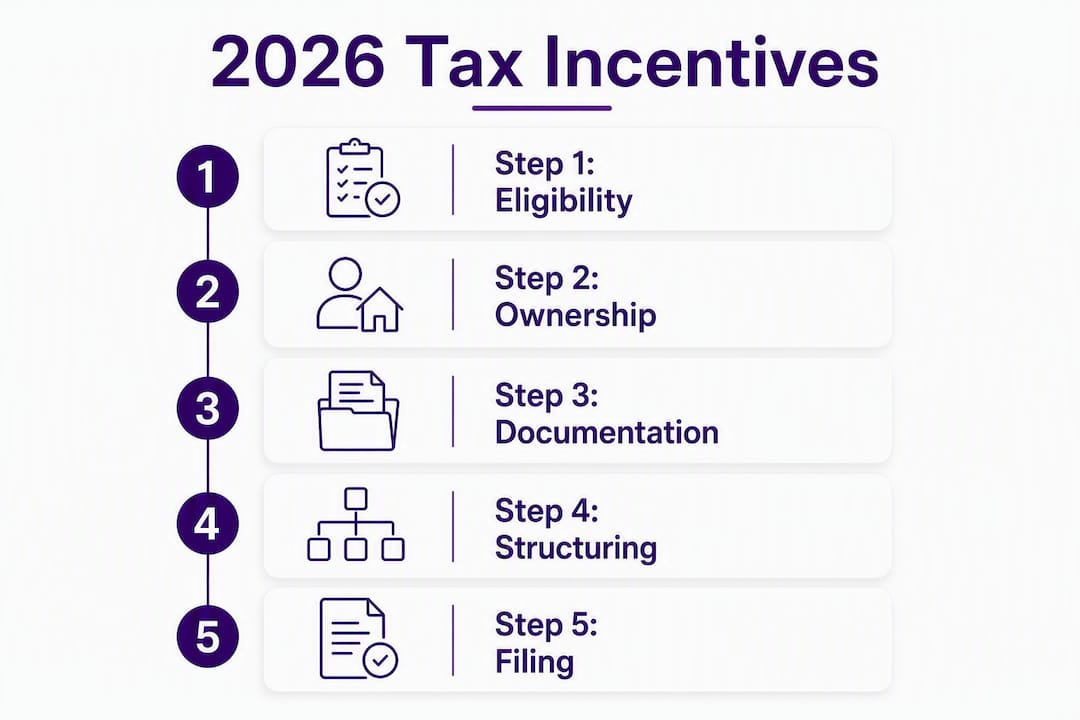
A realistic timeline from close to first tax reporting looks like this: capital call and close in Q3 or Q4, drilling and cost incurrence within the same tax year, year-end cost allocations recorded by the operator, K-1 issued to investors (often by March 15 of the following year, sometimes later with extensions), and investor tax filing incorporating pass-through items.
IRS Publication 5652 covers the specialized tax rules for oil and gas partnerships, including how capitalization, depletion, and uniform capitalization rules interact. It is worth handing it to your CPA before the investment closes.
Pro Tip: Request prior-year K-1s and ask for a reconciliation showing how IDCs and depletion were allocated year over year. Inconsistent allocations across years are a signal that the sponsor may be shifting deductions for bookkeeping reasons rather than passing them consistently to investors.
What tax documents you will receive and what your CPA needs
Plan for these documents from the deal sponsor:
- Schedule K-1 (Form 1065): The primary pass-through document. Shows your share of IDCs, depletion, depreciation, income, and credits.
- Year-end tax allocation memo: Breaks down how each tax item was calculated and allocated.
- Capital account statement: Tracks your basis and at-risk amount.
- Form 1099s: Applicable if the investment generates reportable income outside the partnership structure.
- §48/§48E credit documentation: Required if the project claims investment tax credits.
The filing process follows this sequence:
- Receive K-1 (expect delays; many arrive after March 15 and some after April 15).
- Provide K-1, allocation memo, subscription docs, and capital account statement to your CPA.
- CPA integrates pass-through deductions into Schedule E of Form 1040, applying passive activity and at-risk rules.
- If passive loss limitations apply, carry forward unused losses to offset future passive income.
- File Form 1040 or request an extension if K-1s are delayed.
Pro Tip: Bring the operator’s tax allocation memo and sample K-1 to your CPA before the investment closes, not after. Pre-filing planning lets your CPA model the actual deduction impact against your projected income and flag any passive loss issues before you commit capital.
Mineral rights classified as real property may also qualify for like-kind exchanges under IRC §1031, offering a deferral path for investors who want to roll gains rather than take immediate deductions.
Common pitfalls that invalidate first-year deductions
The most frequent structural failure is an ownership tier that limits liability and defeats the §469©(3) working-interest exception. IRS analysis confirms that tiered entities limiting liability convert otherwise active losses into passive losses under §469, regardless of how the offering is marketed.
Watch for these red flags during diligence:
- Operator refuses to provide a tax allocation memo or prior-year K-1s.
- Offering documents describe a “royalty-like” or “net profits interest” but market it as generating IDC deductions.
- No legal opinion or tax memo supporting the working-interest classification.
- K-1 allocations vary significantly year over year with no explanation.
- Fee structures are opaque or buried in the subscription agreement.
At-risk rules under IRC §465 further limit deductions to the amount you have genuinely at risk in the investment. If you invest through non-recourse financing or structures that insulate you from economic loss, your deductible amount shrinks accordingly.
The single most common structural failure: Operators build liability-limiting tiers that appear investor-friendly but quietly prevent investors from qualifying for the §469©(3) working-interest exception. Always get the full legal ownership chart and have specialized tax counsel review it before closing.
Fieldvest gives you vetted deals and the tools to model your deductions
For accredited investors who want large first-year deductions without spending weeks on operator diligence, Fieldvest provides direct access to vetted U.S. energy projects where the structural work is already done.

Every project on the platform goes through operator track record review, reserves and production data analysis, and legal review of the entity structure. Operators are required to provide sample K-1s and tax allocation memos as part of the listing process, which means you arrive at your CPA meeting with the documents already in hand.
Use Fieldvest’s free oil and gas tax deduction calculator to model your projected first-year deduction before committing capital. For a deeper look at long-term after-tax wealth accumulation, the after-tax wealth projection tool models compound growth against your specific tax situation. When you are ready to move forward, request a deal pack or schedule a pre-investment tax briefing with a Fieldvest advisor at fieldvest.com.
Key Takeaways
Qualifying for project-level energy tax incentives requires a working interest or properly structured partnership pass-through, confirmed accredited status, and documented tax allocations reviewed by a CPA before you invest.
| Point | Details |
|---|---|
| Ownership structure determines usability | Working interest enables the §469©(3) exception; limited partner positions typically produce passive losses only. |
| IDCs are the primary first-year benefit | IDC deductions pass through via Schedule K-1 to working-interest holders; royalty holders do not qualify. |
| Request docs before committing | Always obtain a sample K-1, tax allocation memo, and entity formation docs before signing the subscription agreement. |
| Tiered entities are the top risk | Liability-limiting tiers can defeat the working-interest exception; get the full legal ownership chart reviewed by tax counsel. |
| Fieldvest streamlines the process | Fieldvest vets operators, requires sample K-1s and tax memos, and provides a free deduction calculator to model your outcome. |
Why project-level energy incentives deserve more attention from high earners
Most high-earning investors discover IDCs and percentage depletion years after they could have been using them. The conventional advice to max out a 401(k) and call it a day leaves a significant deduction on the table for W-2 earners with six-figure tax bills.
What often gets missed is the structural nuance. The difference between a working interest and a limited partnership interest is not just legal terminology. It determines whether your deductions offset the income you actually earn or sit in a passive loss carryforward you may never fully use. Sponsors do not always make that distinction clear in their marketing materials, and investors who skip the tax allocation memo review often find out at filing time.
The at-risk and passive activity rules are not loopholes to work around. They are the framework that defines whether the deduction is real for your specific situation. Pairing IDC deductions with accurate at-risk calculations and passive-activity planning is what separates investors who capture the full benefit from those who get a smaller, deferred version of it.
For high earners with substantial W-2 income, the math on a properly structured working-interest investment can be compelling. The key is doing the structural diligence before the capital call, not after.
This article is general information, not tax or legal advice. Confirm current rules and your specific eligibility with a qualified CPA or tax attorney before investing.
Useful sources and next steps for your CPA
Authoritative IRS and regulatory sources:
- IRS §469©(3) Working Interest Guidance: The primary IRS analysis on how entity structure affects passive activity treatment for working-interest investors.
- 2025 Form 3468 Instructions: Covers PWA requirements, construction start tests, and eligibility for increased §48/§48E credit rates.
- IRS Publication 5652: Oil and gas partnership tax rules, including depletion, capitalization, and K-1 reporting.
- 26 C.F.R. § 1.612-4: The federal regulation governing the IDC election for operators holding working or operating interests.
Fieldvest resources:
- Essential energy tax breaks for investors: A deeper dive into the mechanics of qualifying energy deductions.
- What is a qualified energy project?: Defines project eligibility criteria relevant to tax incentive qualification.
- Maximize first-year tax deductions: Step-by-step guidance on documentation and deal structure for first-year deductions.
Your next steps:
- Request sample K-1s and a tax allocation memo from any operator you are evaluating.
- Run Fieldvest’s free deduction calculator to model your projected first-year benefit.
- Schedule a pre-investment review with a CPA who has direct oil and gas partnership experience.
- Ask the operator for the full legal ownership chart and confirm no liability-limiting tiers defeat the working-interest exception.
- Do not rely on projected deductions until a qualified tax professional has reviewed the offering documents specific to your tax situation.
Recommended

Get the Fieldvest Energy Brief
and AI-driven demand shifts — curated for accredited investors. Smart. Strategic. Tax-advantaged.