

Well control insurance, also called Operators Extra Expense or Control of Well coverage, is the dedicated policy that pays to regain control of a blown well, redrill if necessary, and clean up resulting seepage. If you manage drilling or workover operations, your contracts will almost always make this coverage a condition of work. Three implications follow immediately: you need to know the exact limit your contract requires, you need separate proof because standard certificates rarely show it, and you need to understand how insurers size and contest these claims before a loss happens.
TL;DR:
- Control of Well insurance limits are usually set as a multiple of the AFE, with three times being common, but actual coverage can vary based on well difficulty and location.
- Verification requires requesting the actual declarations page showing specific Coverage A, B, and C limits, not relying on generic certificates like ACORD 25.
- Contractual obligations often specify minimum coverage limits, which, if unmet, can lead to material breach and liability shifts; these must be checked before operations commence.
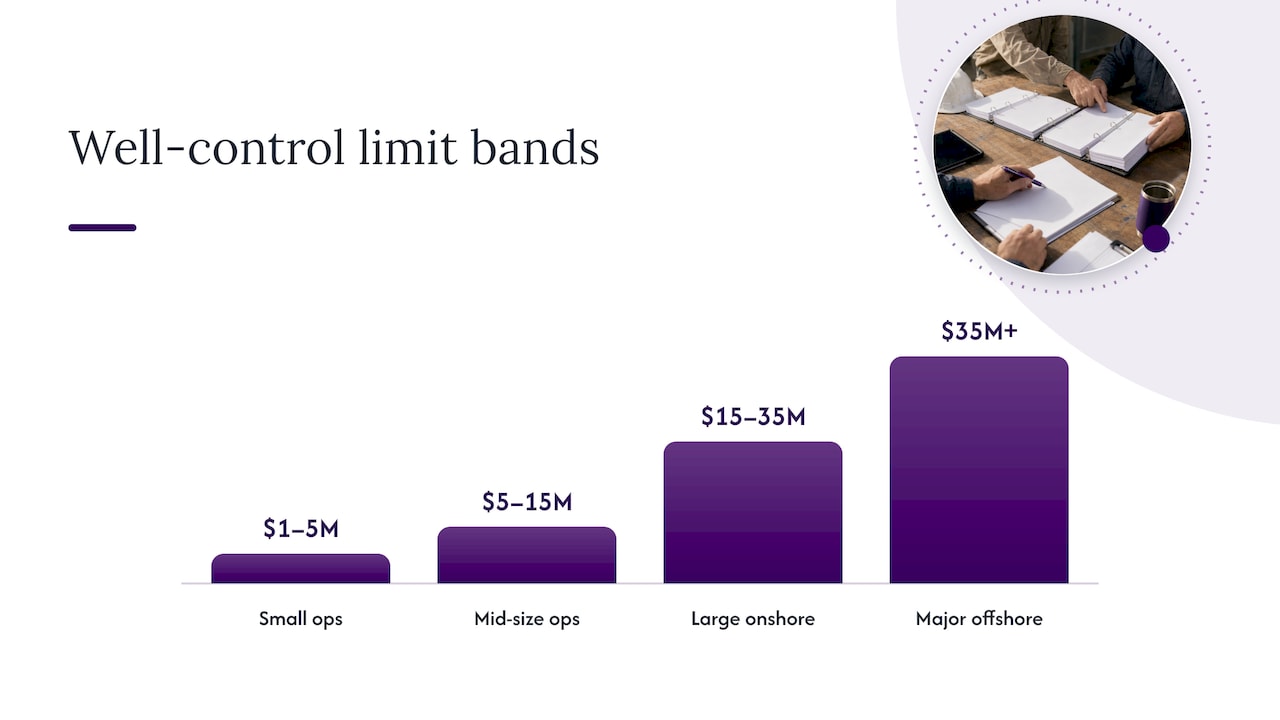
- Smaller operations typically have limits between $1 million and $5 million, while large offshore projects often exceed $35 million, with premium costs correlating to well complexity and risk factors.
- Disputes frequently stem from unclear definitions, exclusions, or inadequate documentation, making clear contractual language and contemporaneous record-keeping essential.
Table of Contents
- What well control insurance actually covers
- Who needs it and how contracts enforce coverage
- How limits and premiums get sized
- Verifying coverage is actually in force before work starts
- Common exclusions and why claims get disputed
- Choosing between single-well and blanket programs
- What investors should require in deal diligence
- A prioritized checklist for contracts and underwriting teams
- Immediate actions before spud and escalation triggers
- How Fieldvest supports due diligence on energy deals
- FAQ
- Sources
What well control insurance actually covers
Operators Extra Expense and Control of Well policies are built around three coverage parts, each addressing a different phase of a well emergency. Coverage A pays for regaining control: specialist well-control contractors, emergency equipment mobilization, and capping operations. Coverage B picks up after control is restored, covering redrilling and restoration expenses, often called “making the hole,” so the well can be brought back to the condition it was in before the incident. Coverage C addresses seepage and pollution, including third-party cleanup costs when a blowout contaminates soil, water, or neighboring property.
Industry explainers describe this three-part structure as the backbone of Control of Well insurance, with several optional extensions layered on top depending on the operation:
- Care, custody, and control (CCC): extends coverage to equipment and property you are responsible for but do not own outright.
- Evacuation expenses: reimburses costs of moving personnel off location during an emergency.
- Wreckage removal: pays to clear damaged equipment and debris after the well is controlled.
- Underground or turnkey options: address exposure from underground blowouts or lump-sum drilling arrangements where liability allocation gets complicated.
Most policies carry sub-limits on these extensions and separate deductibles from the main well control limit, so a headline number like $10 million rarely means $10 million is available for every category. Reading the declarations page section by section, rather than trusting the face amount on a certificate, is the only way to know what each coverage part actually pays.
Who needs it and how contracts enforce coverage
Operators of record almost always carry Control of Well or OEE coverage, but the obligation rarely stops there. Non-operators with a working interest frequently share in the exposure through joint operating agreements, and drilling, completion, and workover contractors are typically required to carry their own limits alongside the operator’s policy. The joint operating agreement is usually where the specific insurance obligations, named insureds, and minimum limits get spelled out, and it is the first document a contracts team should pull before spud.
Master service agreements and drilling contracts typically repeat or cross-reference the same limits, so the enforceable number is whatever the contract states, not a generic industry figure. Finding that number means checking a few predictable places:
- JOA insurance exhibit: states minimum limits each working-interest owner must maintain or confirm the operator maintains on their behalf.
- Drilling contract indemnity section: usually names required coverage types and limits for the drilling contractor specifically.
- MSA insurance schedule: lists minimum limits for service providers, often tiered by scope of work.
- Certificate holder language: identifies who must be named as additional insured and whether waivers of subrogation apply.
Failing to meet a contractually required limit is typically treated as a material breach, which can trigger termination rights or shift liability back onto the non-compliant party in the event of a loss. Coordination matters here: operators, non-op interest owners, and contractors each carry pieces of the exposure, and gaps between them are exactly where uninsured losses tend to land.
How limits and premiums get sized
Underwriters generally start with the Authorization for Expenditure (AFE) for the well and apply a multiple, with three times the AFE acting as a common starting heuristic for setting a well control limit. Carriers depart from that multiple when depth, pressure, or geographic complexity pushes risk higher, or when the account is small enough that a flat multiple would produce an unrealistic limit.
Depth bands and technical complexity are the primary rating factors beyond the AFE itself. A shallow, low-pressure well in a familiar basin rates very differently from a deep, high-pressure well in a new formation, even at similar AFE values. Location adds another layer: onshore conventional wells, unconventional horizontal programs, and offshore platforms sit in distinct underwriting tiers with different loss experience behind them.
Limits and pricing vary widely by operation size. Market guides put small operations in the $1 million to $5 million range, mid-size operations between $5 million and $15 million, large onshore programs from $15 million to $35 million or more, and major offshore accounts frequently exceeding $35 million. That spread reflects how much weight depth, pressure, and location carry relative to the AFE multiple alone.
Insurer commentary also notes that many smaller operator claims cluster near $2 million, which gives carriers room to price smaller accounts below the standard 3x AFE multiple since actual loss experience at that end of the market tends to run lower than the heuristic would suggest. Premiums and deductibles move in tandem with these limit bands: higher-complexity wells carry both higher rates and higher retained deductibles, partly because regulatory financial-responsibility requirements for certain well classes push operators toward carrying adequate coverage regardless of the AFE-based calculation.
Verifying coverage is actually in force before work starts
The single most common verification mistake is relying on a standard ACORD 25 certificate. Control of Well and OEE coverage is routinely evidenced on a separate declarations page or certificate, and a clean ACORD 25 tells you almost nothing about whether this specific coverage is in place.
A practical sequence for contracts and risk teams before spud:
- Pull the drilling contract or JOA and confirm the exact limit and named insureds required.
- Request the OEE or COW declarations page directly, not a generic certificate of insurance.
- Check CCC sub-limits and per-well aggregates to see whether the headline limit is shared across multiple wells.
- Confirm effective and cancellation dates overlap fully with the planned mobilization and operations window.
- Ask for binder language if the policy is still being finalized, so there is written evidence of coverage before work begins.
When requesting evidence from a contractor or broker, ask specifically for “the Operators Extra Expense declarations page showing Coverage A, B, and C limits and any aggregate endorsements,” rather than a general certificate request. That phrasing tends to produce the right document on the first ask.
Pro Tip: Build a certificate-tracking rule that flags any contractor or non-op whose COI shows only general liability and property, since that combination almost always means Control of Well coverage is missing or was never requested.
Common exclusions and why claims get disputed
A handful of exclusions and interpretive issues account for most Control of Well coverage disputes. Formation confinement exclusions can limit payouts when a well diverts into a producing formation rather than venting at surface. Underground equipment exclusions narrow coverage for losses involving downhole tools. Diversion-to-production clauses can cut off coverage once flow is redirected into a pipeline, even if the well was technically still “out of control” moments earlier.
Legal analyses of blowout coverage disputes point to definitional fights as a recurring theme: what counts as a “blowout” or an “out of control” well is not always obvious, and insurers and policyholders can read the same facts differently. Insurers also frequently invoke “most prudent and economical methods” language to contest reimbursement for expensive remediation choices, arguing a cheaper method would have worked.
Reducing this risk starts with contract language: clear operational definitions, agreed emergency protocols, and documentation habits that preserve expert opinions and decision rationale in real time.
- Negotiate clear definitions of blowout and loss of control directly into the drilling contract.
- Establish emergency protocols in advance so response decisions have a documented, pre-agreed basis.
- Preserve expert input contemporaneously, since post-loss reconstruction of “the prudent choice” rarely favors the policyholder.
Choosing between single-well and blanket programs
Operators with sporadic drilling activity, a handful of wells per year or occasional workovers, generally do better with single-well placement, buying coverage specific to each project’s AFE and risk profile. Operators running a continuous program benefit more from an annual blanket policy that covers every well drilled during the term under one aggregate structure.
- Single-well placement fits irregular activity and lets pricing track each well’s specific depth and complexity.
- Blanket programs suit ongoing drilling cadences, offering aggregate protection across the whole program and pricing efficiency compared to placing each well separately.
- Endorsements worth considering include extended redrill provisions, underground Control of Well coverage, and enhanced CCC limits for operations with significant third-party equipment exposure.
Whichever structure you choose, it needs to match what the JOA and any investor documentation actually require. A blanket program that excludes a newly spudded well, or a single-well policy that lapses before a program’s next well starts, creates exactly the kind of gap that contract compliance reviews are designed to catch.
What investors should require in deal diligence
Accredited investors evaluating a working interest or drilling program are exposed to the same well control risk as the operator, just indirectly. Diligence on insurance documentation deserves the same attention as diligence on the underwriting assumptions behind the AFE.
- Request the OEE declarations page, not a summary certificate, for every well in the program.
- Confirm whether aggregate limits are shared across multiple wells in a blanket structure.
- Check that the policy period fully overlaps the planned drilling and completion schedule.
- Ask how the limit relates to the AFE, since a limit set well below the standard multiple may signal underpriced risk assumptions elsewhere in the deal.
Reviewing audit rights clauses alongside insurance evidence gives investors a path to request updated documentation throughout the life of the project, not just at closing.
A prioritized checklist for contracts and underwriting teams
Immediate actions before spud and escalation triggers
Six steps belong on every pre-spud checklist, in roughly this order of priority:
- Read the contract or JOA to confirm the exact Control of Well limit required.
- Request the OEE declarations page directly, never a generic certificate of insurance.
- Confirm CCC sub-limits match what the scope of work actually requires.
- Verify aggregate endorsements if multiple wells share one blanket limit.
- Confirm effective and cancellation dates cover the full operations window.
- Store the evidence centrally so it is retrievable the next time a lender, partner, or auditor asks.
Escalate to legal or senior risk management whenever a contractor cannot produce a declarations page, whenever a limit falls meaningfully below the contract requirement, or whenever policy dates leave any gap around the mobilization date. As a default, size limits to the contract requirement first and treat the AFE-based multiple as the sanity check, not the other way around: the contract number is what is enforceable, and the AFE multiple tells you whether that number looks adequate for the actual risk.
— Sharif
How Fieldvest supports due diligence on energy deals
Well control coverage is one piece of a much larger diligence picture, and verifying it properly takes time most investors would rather spend evaluating the deal itself. The marketplace connects accredited investors directly with vetted U.S. energy operators, and project pages are built to surface the paperwork that matters, including insurance documentation, operator reporting structures, and the contract terms diligence teams need to check before committing capital.

- Vetted operators: every project on the platform goes through screening before it reaches an investor.
- Centralized documents: deal materials, including insurance and contract evidence, live alongside each project rather than scattered across emails.
- Tax-advantaged structure: projects are selected for large first-year deductions alongside long-term income potential.
| What you get | Why it matters |
|---|---|
| Access to vetted U.S. energy projects | Reduces time spent sourcing and screening operators independently |
| Centralized deal documentation | Keeps insurance, contract, and reporting evidence in one place |
| First-year tax deduction exposure | Supports tax planning alongside income objectives |
If you are an accredited investor looking for vetted project documents and a clearer due-diligence process, visit Fieldvest to see current energy investment opportunities.
FAQ
How much does $1,000,000 in contractor insurance cost?
Cost depends heavily on the type of coverage, the contractor’s scope of work, and risk factors like depth and location, so there is no single market rate to quote. For well control exposure specifically, pricing tracks the AFE, depth band, and geography rather than a flat per-million rate, which is why getting a quote against the actual contract requirement matters more than estimating from a round number.
What are the four types of insurance coverage?
In the context of Control of Well or Operators Extra Expense policies, coverage is typically structured in three core parts: Coverage A for regaining well control, Coverage B for redrilling and restoration, and Coverage C for seepage and pollution cleanup, as described in industry explainers of the COW structure. A fourth element often added as an extension is care, custody, and control coverage for equipment and property the operator is responsible for.
What are three things that are not covered by homeowners insurance?
This question falls outside well control and energy operations coverage, which are commercial policies distinct from personal homeowners insurance. Readers researching homeowners coverage gaps should consult a residential insurance guide or licensed agent rather than apply commercial oil and gas policy terms to a personal property question.
Does standard liability insurance cover a well blowout?
No. Standard commercial general liability and property policies almost universally exclude well control and blowout-related costs, which is why dedicated Control of Well or OEE coverage exists as a separate policy. Relying on CGL alone leaves operators and contractors exposed to the full cost of regaining control, redrilling, and cleanup.
How do I get well control insurance?
Well control insurance is placed through a broker experienced in energy risk, who gathers well-specific data including AFE, depth, and location to secure quotes from specialty underwriters. Operators typically need this coverage in place, with evidence available for contract counterparties, before mobilizing equipment or beginning drilling or workover operations.
Sources
- Control Of Well Insurance (COW) - CVI
- Control of Well Insurance: What It Is and Why It Matters - Kinsale Insurance
- What Is Control of Well Insurance? (OEE Explained for Oilfield Contracts) - COI Software
Recommended

Get the Fieldvest Energy Brief
and AI-driven demand shifts — curated for accredited investors. Smart. Strategic. Tax-advantaged.